Shield High-Traffic Pavement From Fuel, Sun, and Wear
Regular sealcoating helps protect parking lots from surface wear and keeps them looking well maintained. Imperial Paving Services provides parking lot sealcoating for shopping centers, offices, industrial yards, and apartment complexes in Sylmar, CA, Sun Valley, and Panorama City. Our sealcoating work covers lot cleaning, oil spot treatment, crack sealing, commercial-grade sealer application, phased scheduling, and traffic control during each stage.
Commercial sealcoating must fit around tenants, deliveries, and customers, so we map out sections and timing with property managers before work starts. Drive lanes and entrances get the extra attention they need, and barricades keep vehicles off fresh coating until it cures. With 10 years in paving, our crews understand how traffic wears a lot and where protection fails first. Each job ends ready for striping. Schedule a site walk through our quote form to plan your lot's sealcoating.
Our Parking Lot Sealcoating Services
Lot Cleaning and Debris Removal
Blowers, power brooms, and scrapers remove dirt, leaves, and loose material from every stall, aisle, and corner. Clean pavement is essential, because sealer applied over dust or debris loses its grip and starts peeling under the first steady traffic.
Oil Spot Treatment
Fuel and oil stains where cars sit for hours would otherwise repel the coating. These spots are cleaned and primed with a product that seals in residue, allowing the sealer to bond evenly instead of leaving thin, worn patches behind.
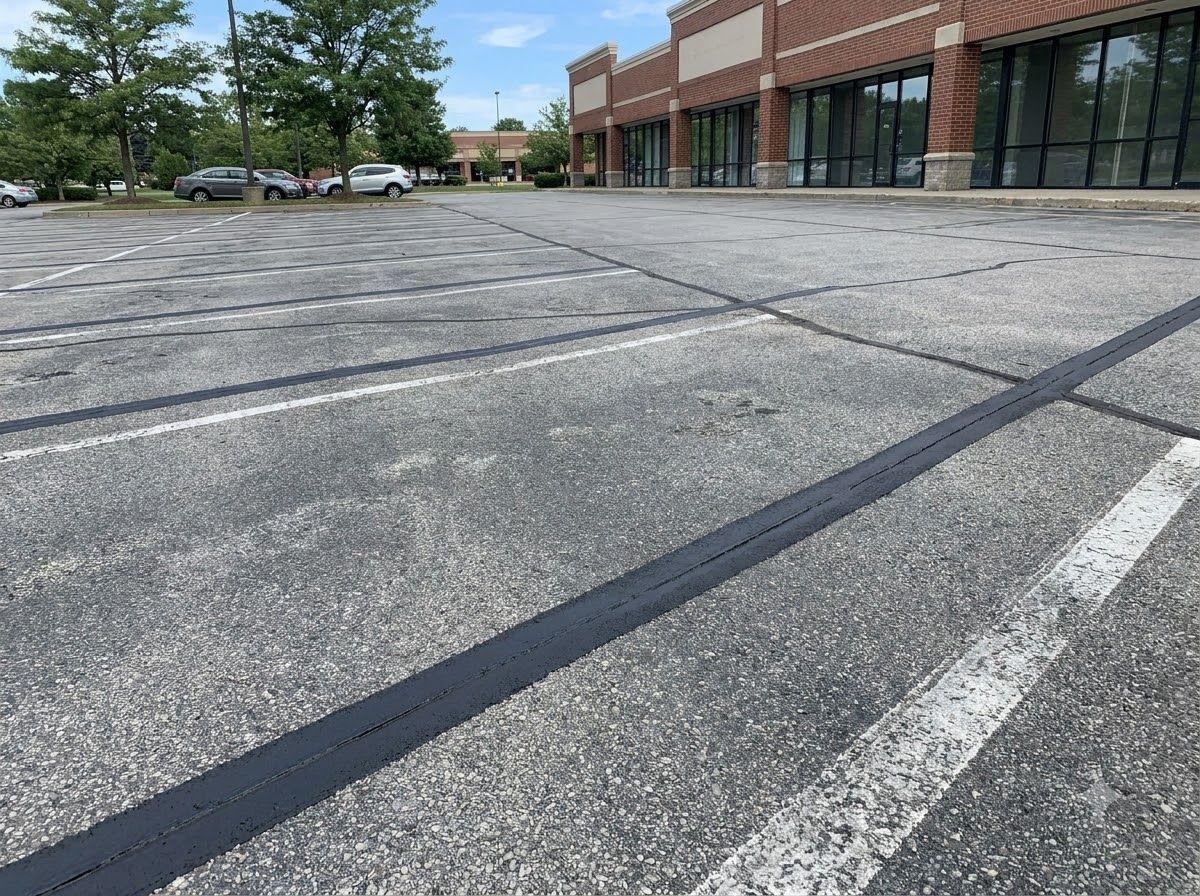
Crack Sealing Before Coating
Open cracks get routed when necessary and filled with hot rubberized sealant before any coating goes down. This combination keeps water out of the base while the sealer protects the surface, addressing both major threats to commercial pavement.
Commercial-Grade Sealer Application
Professional sealer, mixed with sand for traction where appropriate, is sprayed or squeegeed in even coats across the entire lot. Drive lanes and turning areas often receive an additional pass, since tires grind away coating fastest in those zones.
Phased Sealcoating Schedules
Large properties rarely close completely. Lots are divided into sections that can be coated and reopened in sequence, keeping entrances, accessible stalls, and storefront parking available for customers while the work moves steadily across the site from one section to the next.
Traffic Control and Barricading
Cones, barricades, and caution tape keep vehicles and pedestrians away from wet sealer. Clear signage guides drivers to open areas, protecting the finish and preventing tracked coating on sidewalks, lobby floors, and the shoes of visitors walking inside.
Benefits of Parking Lot Sealcoating
Protection From Fuel and Fluid Leaks
Parked cars drip gasoline, oil, and coolant that dissolve asphalt binder over time. A sealed surface resists those chemicals, preventing the soft, crumbling patches that form in busy stalls and spreading damage along drive lanes, entrances, and loading areas.
A Cooler, Longer-Lasting Surface
Sealer reduces the oxidation that intense sun causes, keeping asphalt flexible instead of brittle for more seasons. Some reflective formulas also lower surface temperatures noticeably, which can ease the heat radiating from large paved areas during long summer afternoons.
Predictable Maintenance Budgets
Regular sealcoating turns pavement care into a planned expense instead of a series of emergency repairs. Property managers can forecast costs years ahead and avoid the large, unexpected bills that come with neglected asphalt reaching failure all at once.
A Property That Looks Well Managed
Prospective tenants, shoppers, and clients notice faded, cracked lots right away and judge accordingly. A uniform black finish makes buildings look newer and better maintained, supporting leasing and sales efforts and helping businesses project professionalism before anyone walks through the door.
Slower Water Damage
Sealcoat closes small surface openings that would otherwise let rain and irrigation runoff reach the base. Keeping moisture out preserves structural support and reduces the number of potholes and sunken areas that develop between scheduled maintenance cycles over the years.
Sharper Striping Results
Fresh striping painted over a newly sealed surface stands out with strong contrast. Bright white and yellow lines against deep black pavement improve visibility for drivers, help accessible spaces stand out, and make the entire layout easier to follow.
Keep Your Lot Looking Ready for Business
Faded, stained pavement quietly tells visitors something about a property before they ever meet the people working inside. Imperial Paving Services helps owners and managers in Sylmar, CA, protect their pavement with sealcoating that is planned around tenants and finished to a clean, even standard. Regular protection costs far less than repairing pavement that has been left to bake and crack under the relentless summer sun. Review when your lot was last sealed and striped, gather any notes about recurring problem areas and repairs, and book a walkthrough on our quote form to start building a sealcoating schedule for your property.
How often should a parking lot be sealcoated?
Traffic decides the schedule. High-traffic lots at shopping centers, hospitals, and schools typically need sealcoat every 2 to 3 years, office and industrial lots about every 3 years, and lightly used private lots every 3 to 5 years.
What is the difference between coal tar and asphalt emulsion sealers?
Coal tar sealers resist fuel well but contain compounds that many communities restrict because of health and environmental concerns. Asphalt emulsion sealers use a refined asphalt base, carry fewer of those concerns, and remain the common choice on California properties.
How do fuel and oil spills damage parking lot asphalt?
Asphalt binder is a petroleum product, so gasoline and oil act like solvents that soften it. Over time, saturated spots turn spongy, lose stones, and break apart under traffic. Sealed pavement resists that softening far better than bare asphalt.
Can sealcoat go directly over new crack sealant?
Sealant usually needs time to set before coating, and some rubberized products need a detackifier or a waiting period first. Applying sealer too soon can cause cracking or discoloration over the repairs, so crews follow each product's cure guidance.
Can a business stay open while its lot is sealcoated?
Yes. Imperial Paving Services divides lots in Sylmar, CA, into sections, coating one area while customers park in another. Entrances and accessible stalls are sequenced carefully, so the business keeps operating throughout the project with clear signs guiding drivers.
Why is sand added to parking lot sealer?
Sand gives the dried coating a slightly textured surface that improves traction for tires and pedestrians, especially when the pavement is wet. It also adds wear resistance, helping the coating hold up longer in drive lanes where tires constantly turn.
Can a heavily patched lot still be sealcoated?
Yes, and sealing often helps patched lots look uniform again. Our crew at Imperial Paving Services evaluates patch quality on lots across Sylmar, CA, first, since loose or failing patches need repair before any coating can perform properly.
How many coats of sealer does a parking lot need?
Two coats are standard for most commercial lots, giving full coverage and a more durable protective film. Entrances, drive lanes, and drive-through areas often receive a third coat because those zones see the heaviest turning and braking traffic all day.
ASK US
FAQ's
How often should a parking lot be sealcoated?
Traffic decides the schedule. High-traffic lots at shopping centers, hospitals, and schools typically need sealcoat every 2 to 3 years, office and industrial lots about every 3 years, and lightly used private lots every 3 to 5 years.
What is the difference between coal tar and asphalt emulsion sealers?
Coal tar sealers resist fuel well but contain compounds that many communities restrict because of health and environmental concerns. Asphalt emulsion sealers use a refined asphalt base, carry fewer of those concerns, and remain the common choice on California properties.
How do fuel and oil spills damage parking lot asphalt?
Asphalt binder is a petroleum product, so gasoline and oil act like solvents that soften it. Over time, saturated spots turn spongy, lose stones, and break apart under traffic. Sealed pavement resists that softening far better than bare asphalt.
Can sealcoat go directly over new crack sealant?
Sealant usually needs time to set before coating, and some rubberized products need a detackifier or a waiting period first. Applying sealer too soon can cause cracking or discoloration over the repairs, so crews follow each product's cure guidance.
Can a business stay open while its lot is sealcoated?
Yes. Imperial Paving Services divides lots in Sylmar, CA, into sections, coating one area while customers park in another. Entrances and accessible stalls are sequenced carefully, so the business keeps operating throughout the project with clear signs guiding drivers.
Why is sand added to parking lot sealer?
Sand gives the dried coating a slightly textured surface that improves traction for tires and pedestrians, especially when the pavement is wet. It also adds wear resistance, helping the coating hold up longer in drive lanes where tires constantly turn.
Can a heavily patched lot still be sealcoated?
Yes, and sealing often helps patched lots look uniform again. Our crew at Imperial Paving Services evaluates patch quality on lots across Sylmar, CA, first, since loose or failing patches need repair before any coating can perform properly.
How many coats of sealer does a parking lot need?
Two coats are standard for most commercial lots, giving full coverage and a more durable protective film. Entrances, drive lanes, and drive-through areas often receive a third coat because those zones see the heaviest turning and braking traffic all day.